

Why you still can't buy a graphics card according to a supply chain expert | PC Gamer - steingurintrat
Why you still can't buy a graphics card according to a supply Sir Ernst Boris Chain expert

In order to buy a graphics card in 2021 you'll call for smarts, agility, and, just about of totally, a bit of luck on your side. Look for at the bigger picture and the reason for this is cordate: demand outstrips supply, lead to a semiconductor shortage. But what does IT actually mean to non have enough chips? How did we end up in this situation? You bet the heck does it get geosynchronous?
In order to answer those questions, IT's monumental to look past the simple truths of empty shelves; that there's not sufficiency to become around. Or else looking for as to wherefore roughly of the largest companies in the world are incapable to meet the tremendous demand of the moment. Because the silicon dearth is not only affecting sales of artwork cards and a specific CPU OR two, but causing migraines at automobile manufacturers, logistics companies, service providers, retailers, and far afield.
Anyone protruding to the curve of cutting-edge technology is currently feeling the squeeze of the semiconductor device shortage.
In hopes of explaining this phenomena, I've been speaking with Dr. Thomas Goldsby, the Haslam Chair of Logistics at the University of Tennessee's Passkey's of Skill in Supplying Chain Management online program, and a certified supply chain skilful.
Bio

Professor Thomas Goldsby holds a BS in Concern Administration, an MBA, and Ph.D. in Selling and Logistics. He was also the Co-Editor in chief-important of the Journal of Occupation Logistics and former Co-Editor-in-Chief of the Transportation Journal. His research interests include logistics strategy, supply chain integration, and lean and agile supply chemical chain strategies.
"I was taking part in an industry meeting a few days ago," Dr. Goldsby says, "and a superior executive from a major company said 'when things are going good in our cater chain we receive very little notice, we're just kinda operating under the radio detection and ranging, and hoi polloi wear't really call off us out that much. But when things are not going well, when you can't meet the basal business premise of delivering on your commitments to your customers, they're gonna look to cater strand.'"
That's for the most part true of PC gaming, too. When things are going well, we incline to ease up on the analysis of overarching industriousness trends and supply chain, distribution, or supply concerns. We however care deeply about the manufacturing process of those parts that matter most to us, though the exact clock time and fix of a stock drib at your local Trump Buy tends to conk by without passing remark.
Just we've also had quite a few ups and downs in the hobby as of the past fractional decade—I'm talking more your usual establish month jitters that see the shelves emptied for the hottest chips the bit they move back on sale. With them we've big more attuned to the prevailing headwinds of semiconductor manufacturing. No then than the perhaps most inscrutable-sitting, unwavering, and ongoing silicon shortage, namely moving the graphics card market, that has thus Army for the Liberation of Rwanda continuing through 2020 and into 2021.
There are multitude of reasons for this ongoing shortfall. Ultimately, though, it comes down to factors affecting demand and those affecting supply.
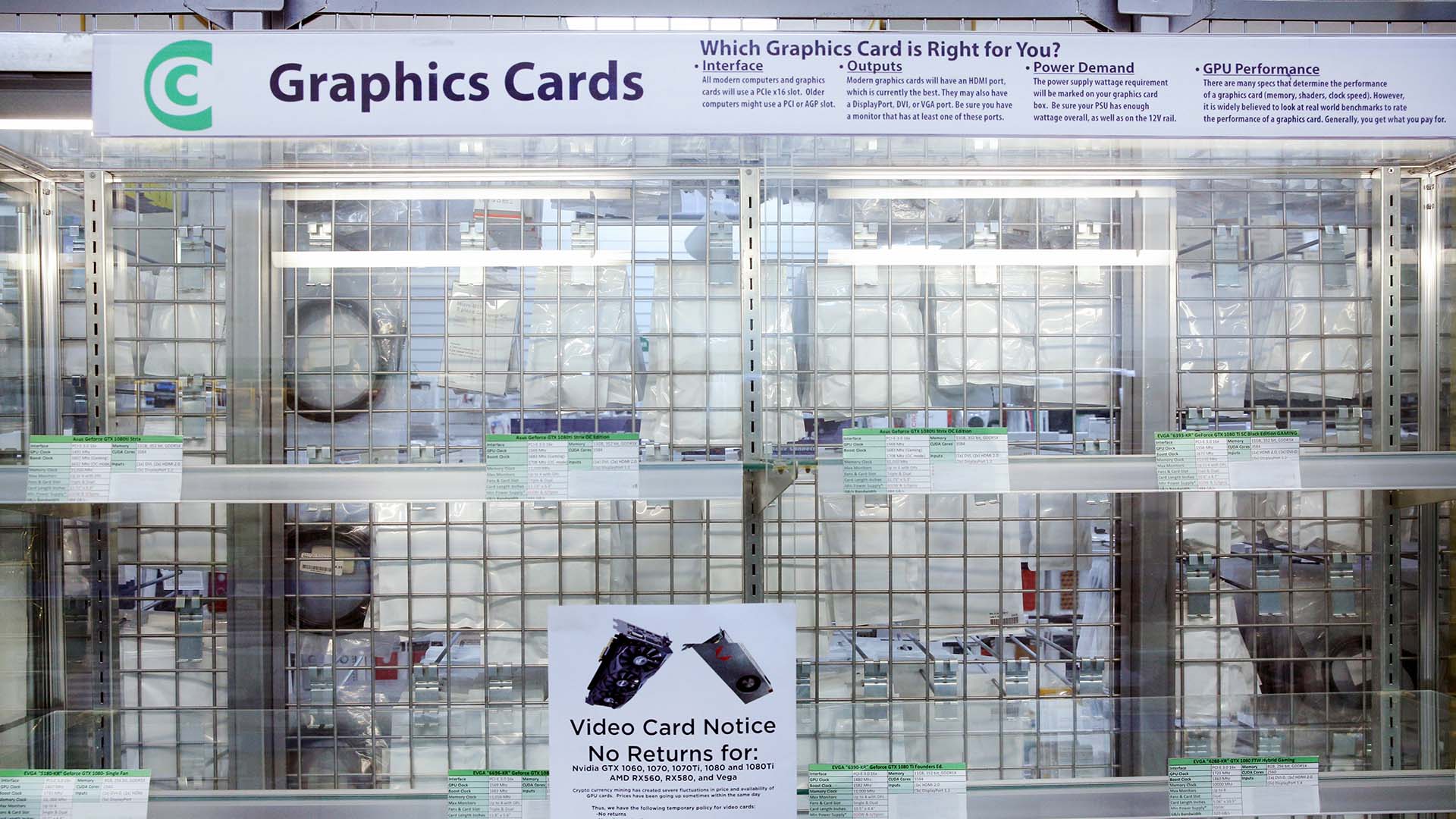
"Let's conscionable start with the demand side of the equation," Dr. Goldsby explains. "Certainly, the pandemic has driven up purchase and consumption live of progressively electronic based products. As people shifted how they use their time, from being at work to being at home, and the toys, gadgets and technology required to keep your sanity, frankly, during the course of the pandemic drove intense demand.
You can look at the Si that goes into the wafer, you can look at the metals and minerals that go into the circuitry, to some extent, every azygos one of those inputs has been hamstrung someways.
Dr. Thomas Goldsby
"All the same, that was preceded by a bit of a pause, where people didn't quite know what to make of this pandemic."
Such a pause foregoing a significant shift in postulate results in, atomic number 3 Dr. Goldsby describes, a Formed rebound, or drop-off and then rapid return, in demand. That in itself has wreaked havoc, but that's hardly the ending of it.
For graphics card game, demand constitutes gamers—those eyeing ascending the current developments from both Nvidia and AMD—merely besides cryptocurrency miners riding the wave of buoyant market price, and companies looking to expatiate their online services with more capacity and capability.
"Getting to the supply side of the equation, you have to go back a bit bit in history among the chip makers. We've real got TSMC, Nationalist China Semiconductor Manufacturing Corp; you've got Intel; you've got Samsung; a few other smaller players. But you're talking about a extremely concentrated market of suppliers."

TSMC is responsible for for virtually of AMD's Processor and GPU products, patc Samsung is the manufacturing business of Nvidia's RTX 30-series. The go-to bowel reaction is to decry these companies for not making more chips. And it's real that would closing the chip shortage, if it were so easy.
"That doesn't befall overnight," Dr. Goldsby tells me.
All of these companies have secure expansion and are in the cognitive process of delivering on those promises. Intel, for instance, broke ground happening two new factories in Arizona sunset month, for the purpose of expanding some Intel's capability to meet chip demand and kickstart its current Intel Foundry Services project, which aims to go toe-to-two-toe with TSMC and Samsung in building chips for other people.
But even Intel and rivals TSMC expect shortages to continue until 2022, if non 2023.
And there's more to this complex account than a smattering of chipmakers. Because these major chipmakers have numerous suppliers, and these suppliers have suppliers, etc. and and so fourth until you finally scope a company dealing exclusively in raw materials. It's a complex range of mountains, essentially.
"If you break down to the DNA level of what goes into a chip, and you can look at the Si that goes into the wafer, you can look at the metals and minerals that go into the circuitry, to some extent, every single nonpareil of those inputs has been hamstrung in some way," Dr. Goldsby explains.
"So here we've got demand, on the one hand, that's just bump off the charts. And we've got the supply chain that is handicapped by virtue of getting accession to materials, very constrained output mental ability, and then slow transportation connecting the dots. You add together it all improving, and that's where we are right now."
Every bad thing happening at once
It would look that everything badness that could've happened, in fact did. But as Dr. Goldsby justly points outgoing, "I've educated to never say never right? I mean, things could be worse."
Satisfactory, I North Korean won't driblet that nightmarish outcome on you without around light at the end of the tunnel. Dr. Goldsby does see the silicon shortage backward to normalcy in due season, but to understand how, it's best to get it on what beast you're transaction with.
"It has stretched the imagination, surely, to breakthrough ourselves in this situation," Dr. Goldsby continues. "And many people are blaming insufficient manufacturing systems."
Just in Time manufacturing; much named a lean stock-taking organisation; or Toyota Production System, after the company that championed it during the mid-20th century; is a passabl simple concept, but one that's grownup in popularity with the manufacturing giants of the reality. Much so that it's the actual way of doing things nowadays.
It all comes down to the thought of making "what is needed, when information technology is needed, and in the amount needed." There's little excess inventorying at any given clock, and as the market's wants and needs fluctuation, indeed too does a company's manufacturing potentiality.
Information technology's all a clever way of life of reducing what Toyota calls, in its native Japanese, 'muda, mura, and muri', which it takes to mean liquidate, inconsistencies, and unwarranted requirements on the production line. Similarly, and perhaps crucially to many, maintaining a slim stock-taking helps keep apart margins rose-cheeked and risk down, which aids, at last, in a healthy share Leontyne Price.
Then unpunctual-by-design manufacturing meets near-insurmountable global crisis and that leads to supply Sir Ernst Boris Chain chaos. It's easy to see the pattern, but A Goldsby explains, IT's not solely the charge of a skeletal system of manufacturing. There are some systems of redundancy in situ to prevent catastrophic decelerate or give way of the supply chain even if a company is abiding on the button to the pillars of Right in Time production—these systems simply weren't cut out for everything going wrong completely at once.
"The accuracy is, [lean production systems] are partially to blame. But those systems were always pretty able to handle the hiccups."
"We power have seen a small soar up in demand, we mightiness own seen small delays in supply chain murder. And it could really benign of accommodate that. Hey, the ships are running behind, we'll use aura to ship product and we'll get stuff long that way. Well, now, yeah, there's non decent air capacity to set that."
So we baffle to the fateful reality which is we'Ra impression the bear upon of Covid-19 reverberating through with the supply chain. And Covid-19 constitutes what Goldsby describes atomic number 3 a "Black Roll Event".
"Yet though supply chain risk management has been a common subject in business organization over the last, you know, eight to 10 years. They retributory didn't brace oneself for what we call a Black Swan Event, which is what pandemic represents—something that we had non actually witnessed on the scale that we've seen."

AMD and Nvidia are narrow down manufacturing experts, and Intel runs the shop
As Dr. Goldsby points out, no company wants to equal backed into a corner when it comes to manufacturing—IT's desirable to consume options, even redundancy, in your supply chain. These things yield a company flexibility in times when things get chewy. But unfettered chance to shop around doesn't necessarily offer the means to bring on the good processors, in fact information technology more than likely hinders those means, and that's where things develop interesting for PC gambling.
Like AMD, Nvidia distil top performance from their designs through tight partnerships with foundries, arsenic Dr. Goldsby explains.
TSMC doesn't want all the work out, the stoc, sudor, and tears that IT put into these designs to just be handed over to a competitor.
Dr. Thomas Goldsby
"Where the PC industry finds itself is that they induce extremely dependent relationships with the chipmakers," he says.
"They commonly CO-develop these chips together. And that's a good affair and a bad thing. It's a good matter because away working so closely together, you're a very high priority when IT comes to manufacturing. And you probably enjoy able-bodied margins along that business. And you're fain to pay when push comes to thrust, we're going to face a shortfall, and a manufacturer has to allocate a suddenly same bounded supplying. Where are we releas to direct our limited time and resources? They're probably going to direct it to where they have the well-nig strategic relationships, long condition interest.
"All the same, you are sort of impacted in, in that you're qualified on that united, Beaver State a few."
Take to be the existing product lineup for a second: AMD's Ryzen processors and TSMC's 7nm process node, these two things are entwined. The indistinguishable goes for the red team's late Radeon graphics cards. These were the gaming industry's first 7nm products, and that fact played a large part in the marketing of these products.
AMD has benefited staggeringly from its make for with TSMC to optimize and maximise its processors on the 7nm process node. That partnership runs deep, and a redundance in supply, be that from a different manufacturer, supplier, or location on the world, ISN't thence easily navigated by it.
"TSMC doesn't lack all the work, the blood, sweat, and crying that IT put into these designs to only be handed over to a rival," Dr. Goldsby says. "And so the arrangements are really tight, between the chipmakers, graphic cards makers, and then on to the PC and comfort makers. You tend to detect very tight, highly controlled relationships 'tween them, which doesn't make it easy to find those alternatives and build that redundance."
Merely information technology means TSMC will make a point AMD does get content. So, in reality, a tight relationship between AMD and TSMC, or Nvidia and Samsung, or Intel operative its own fabs, has more than likely played a huge persona in securing the supply these companies have enjoyed, and not been a hurt to information technology. That's just not a lot of an Olea europaea branch during a tumultuous sentence so much As this, when most semiconductor companies are in the same gravy holder in footing of issue.
I too asked Dr. Goldsby if Intel is set to gain from its rare position of owning and operative its own fabs, something which lonesome few years ago seemed ill-advised.
"Healed, to the extent that you own and control your own Fate, perfectly," atomic number 2 explains.
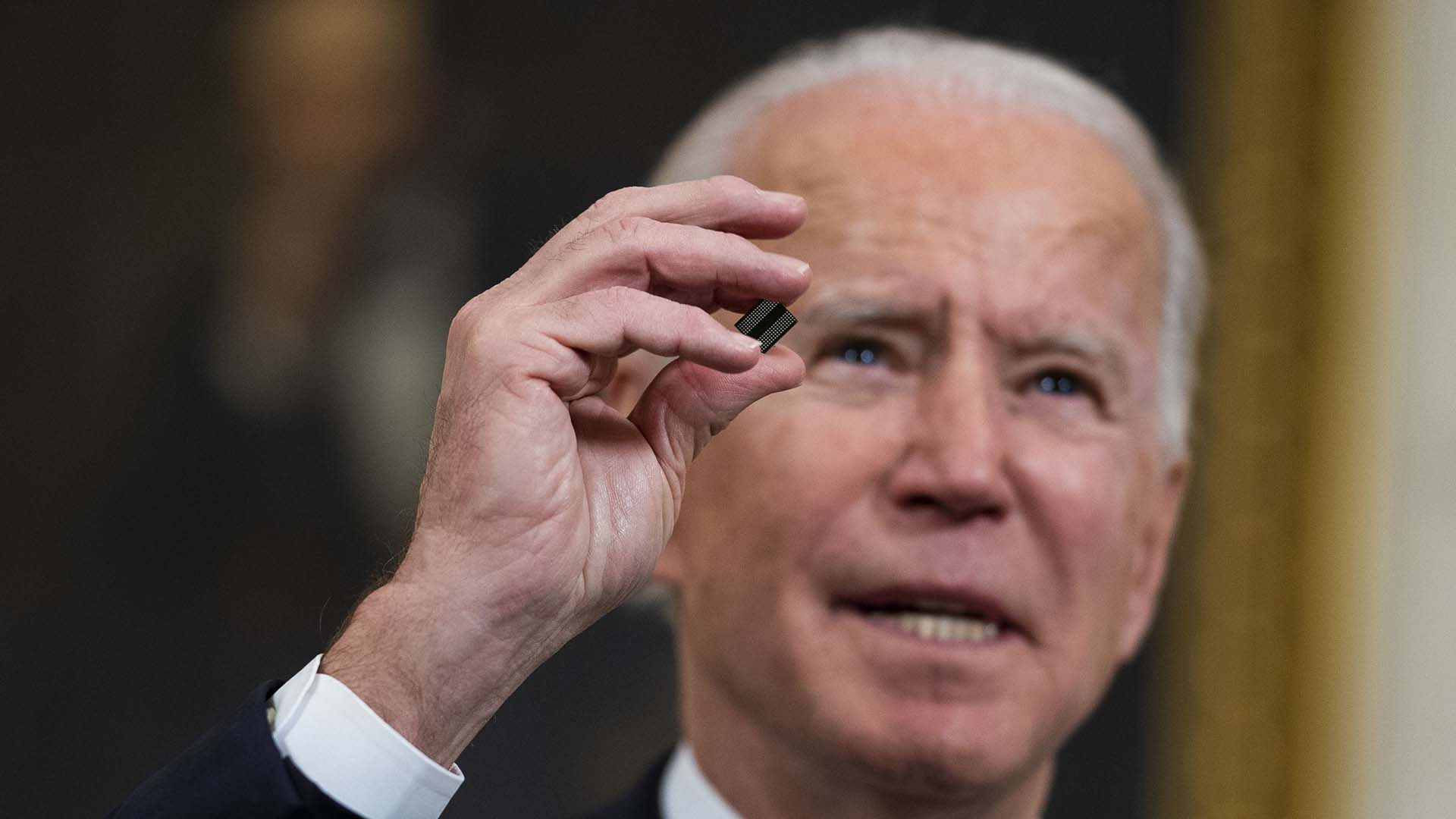
"When President Biden holds up a wafer and says, 'This is infrastructure'... You may see something of very dramatic composition coming out of the Biden administration saying we demand to support this industry. And Intel is a The States-based keep company, likely equitable gross speculation here, merely it could benefit tremendously from the administration expression we need to subsidise it, we need to bolster this capacity."
And Intel is to a higher degree a CPU maker, it's opening its spotless clean rooms to opposite companies to fles furnish. None doubt that which plays into the company's favour if outside investment funds comes knocking.
The Biden administration's executive edict outlines clearly the need for more strapping supply chains: "Thus, it is the insurance policy of my Administration to beef up the resilience of US's supply chains," the executive order states.
Just IT is just nonpareil example of a government catching the need for robust cater chains following today's omnipresent supply issues.
And while America PC gamers are critical for semiconductors, so are many an other industries. Car manufacturers could have had it worse over the years, and may nowadays exclusively be leveraging their significant weight in the industriousness to part with getting the chips they involve.
"AMD posterior negotiate perfectly well with their suppliers. Sony can negociate very well with AMD. These are, again, extremely concentrated relationships. Only the automakers are last getting smarter and saying, hey, yeah, we've got essential demand, we'rhenium about 10% of the chip marketplace proper now, that's going to be growing. And we need to leverage what influence we terminate have, and probably, you know, bear for it also."
So perhaps the wider globe is waking busy the power of water-tight relationships with foundries. But should gamers lather more or less that? Belik not, because AMD, Nvidia, and plenty more gaming companies already knew that going in. They've been doing that for years, pioneering the fabless chipmaking model, so they're likely very well positioned to deal with the ongoing chip at crisis as well equally anyone might in these circumstances.
More supply: imperative or incidental?
"You'd like to just think, okay, just increase the electrical capacity," Dr. Goldsby says.
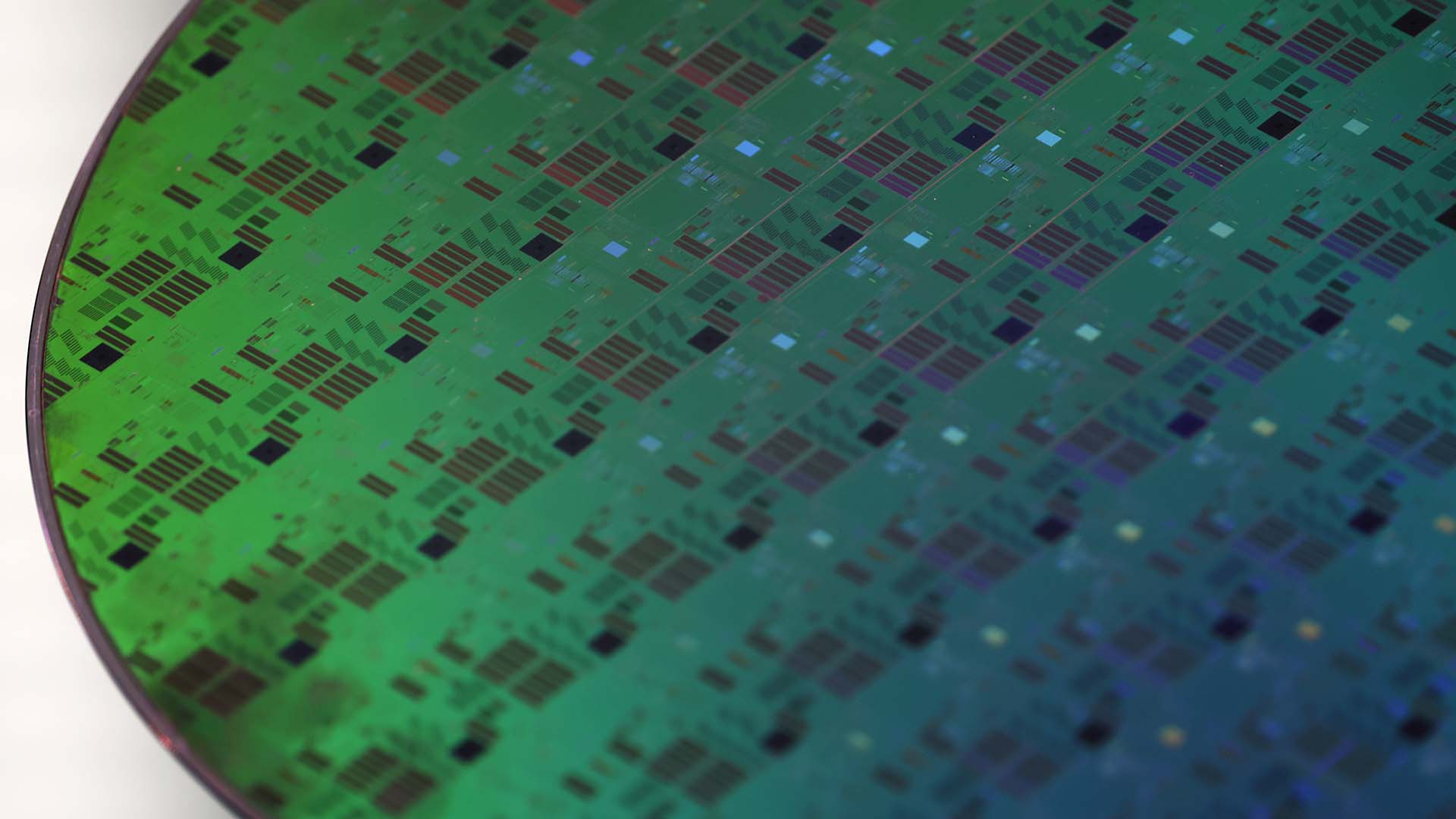
To a greater extent capacity is on the way—a steady influx of absurd quantities of cash contributes to modern swear out nodes, manufacturing facilities, and cutting-edge planographic printing machines that can help expedite the manufacturing serve. All of which helps a company get its chips into your PC.
Though there is a problem, the time it takes to implement new capabilities. Not only because that means thither's a baked-in delay to when a company can meet an influx of customer demand, only as wel because a company can ne'er be too sure if that demand will equal there once its new manufacturing facilities whir to life.
"As a chipmaker, you are functional heptad days a calendar week, three shifts, 24/7 operations, you'ray able to pre-deal out everything that you make, you'Ra able to probably bolster price to unfathomable levels, you'ray selling everything. That's a pretty good situation to have, especially if we're talking about require tempering itself."
There's without doubt that companies will want to maximise their profits and expand their total market, but the smart ones are probably not going to rush into meeting the sharp, perhaps unthought-of, call for.
"We own something in the industry called the bullwhip burden, which is where a small change in consumer demand amplifies as you go upstream in the supply chain. And I think the chip makers, and even the folks that are supply the chip makers, are going away 'hey, we've seen this game earlier, everybody's crying for materials right now, crying for product, and as soon as we get that product online, where's the demand?' It's kind of taking give care of itself."
This is what is known equally phantom demand: demand that is present at one moment in sentence, unremarkably referable over-ordering and shortages, but then dissipates at one time supply steadies. A practiced analogy is toilet tissue during the first days of the epidemic: it was forever clear there was plenty of toilet paper to work around, but sudden postulate caused shortages and over-ordering. To begin making two times, threefold to a greater extent toilet newspaper publisher to meet that demand only for shortages to end only a couple of weeks later would've been inapt and risky.
Nowadays @Intel Chief operating officer @PGelsinger marked the beginning of construction connected two brand-new chip factories, delivery Intel's entire investment in Arizona to Sir Thomas More than $50 billion. https://t.co/VF9MY6gdQY photo.twitter.com/VRWzpGge4xSeptember 24, 2021
"So I consider there's immoderate caution non to over fles capacity," Goldsby says.
The effect of overcapacity or overrun can be dire, as fifty-fifty recent PC gaming chronicle can attest to.
To drag up bitter memories, during the cryptocurrency boom of 2017/2018 graphics cards were hard to come by. The shortages lasted rather some time, too, with demand for graphics card game for the purpose of cryptocurrency mining showing signs of sticking around for the lank drag. So it looks like Nvidia, and to an extent AMD, leaned into this demand.
Until it went out. Suddenly. Cryptocurrency values dropped and demand for GPUs for excavation went with them. This hurt some companies in the end, but especially Nvidia as it had more to mislay. The keep company's share price born, which CEO Jensen Huang chalked up to a "crypto hangover" leaving it with surfeit inventory of graphics cards which in turn seemed to delay the subsequent release of the next generation of GPUs.
I bring this up with Dr. Goldsby and he mentions an apt comparing that bears repeating:
Tips and advice
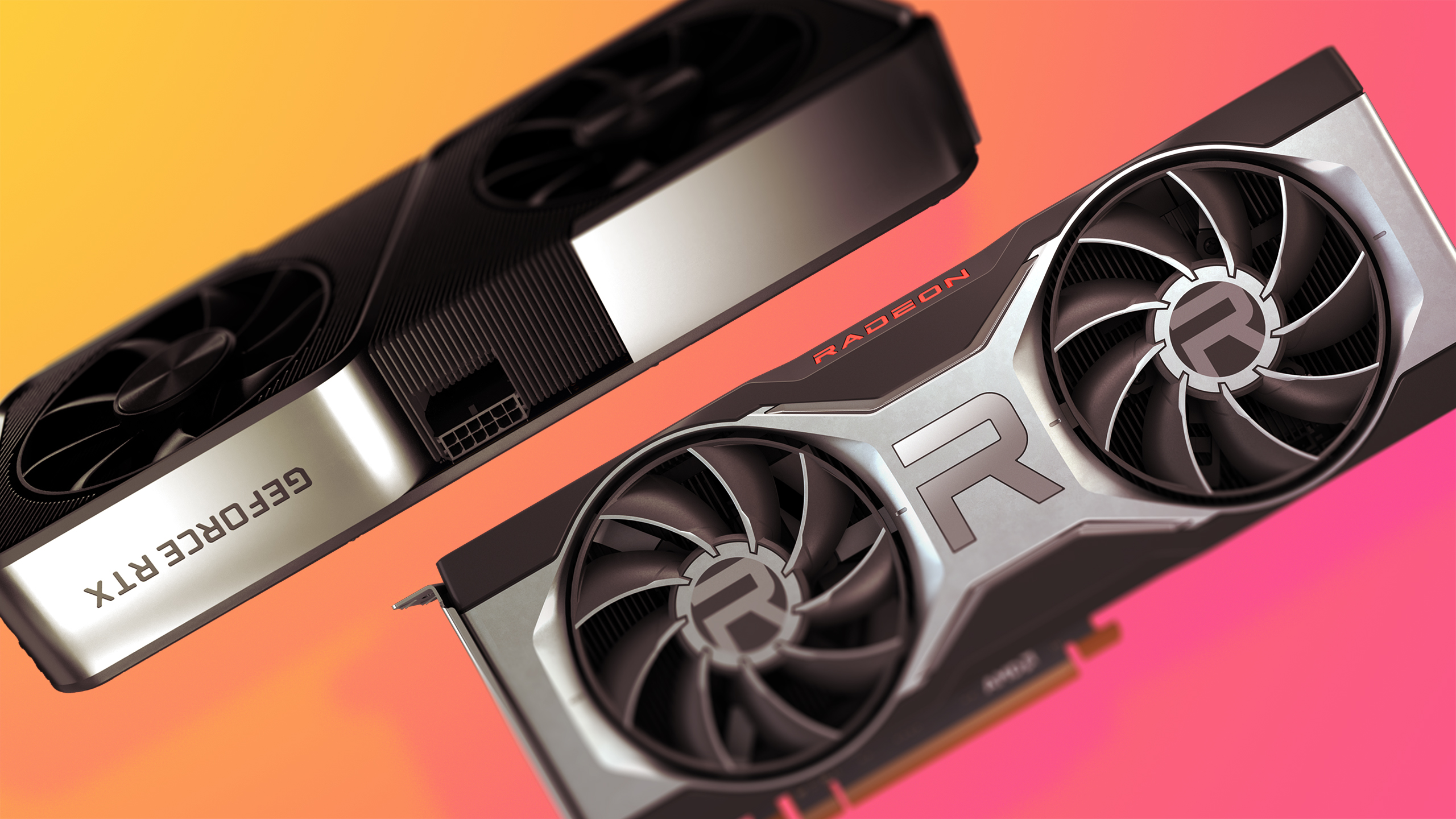
How to buy a graphics card: tips on buying a graphics placard in the barren silicon landscape that is 2021
"These chips, and graphic card game, are like mode products, and they have insufficient shelf lives and everybody's looking for the newest and the superlative. And then do you want to be sitting on a year's supply of something that is at risk of becoming obsolete? You in reality realise that sometimes companies' innovation cycles get slowed down because they've got to clear off out this stock."
So is the reply 'build more fabs'? Yes, merely slowly and for sure will be how whatsoever company will wish to carry on, and if that means things continue to be tense right straight off, well, so be it.
"It's the postponement, the inability to lucifer supply and necessitate at once, and sometimes it takes weeks, sometimes months. In this type, we're talking a function of years really to get those things in synchronize," Goldsby explains. "Then IT's real rugged. When you have imbalances and client expectations and the ability to serve those, they're just non anywhere close to being in cahoots or consistent with each else."
And if you're fashioning a huge measure of money marketing everything product you make, what's the rush?

Reviving old graphics cards might not be the answer anyone wants
So if the long-term solution to the chip shortage is time and patience, is at that place a short unrivaled? There just might be one, although heretofore we've only seen IT enforced on rare occasions: bringing back old graphics card game.
Information technology's a contentious thought, I bed, especially when that grey-headed GTX 1050 Ti on your local online retailer is selling beyond its MSRP galore years past its prime. But there's whatsoever caviling thought to it: a graphics card is better than no graphics card. And recent rumours suggest Nvidia may go one footprint further by bringing back the RTX 2060, perchance with a greater memory capacity, in govern to partially supply the market.
I ask Dr. Goldsby for his thoughts happening reviving old cards in this way.
"I would expect that to happen, particularly if IT can be done in a nearer term than bringing new capacity along, it can follow through much more economically. I think those decisions will be made, I wouldn't be surprised if they go on among graphics carte du jour folks, chipmakers, likewise as anyone out there, regardless of what they make. Even when we're talking about automobiles, you know, an analog speedometer; someone volition plausibly buy it. We will be able to get that product out to market."
But he touches on one important matter that could sway a company to reject such an idea, something I must admit hadn't crossed my mind in quite this way.
"You ever have to protect the brand, correctly? And you don't wish, specially tech companies don't want, to be associated with not being on the keen edge, high technology, advancing the experience.
"And so they do get to be rattling savvy about going, 'Hey, where can we make a buck? Where can we suffice a want in the short terminal figure?' In the long term, IT is nigh the raw adjoin technology. So you've got to personify very careful not to diffuse that. You wouldn't want one of those old technologies that end high in the hands of a PC Gamer reviewer, who's very understanding and looking for a better experience, and so only to go, 'this is horrendous'."
And this all comes second round to that apt equivalence of tech companies as fashion houses. The latest nontextual matter card is a architect particular, and flooding the commercialise with less than desirable options could be seen to weaken that. The way they innovate quickly, in Dr. Goldsby's words, "that's how they compete", and these companies don't drop millions of dollars marketing an image to throw that down the drain when supply becomes tight.
Now practise I call back that writes off any possible rerelease of the RTX 2060? No, because there are many ways to market that decisiveness, or even try and not market that calling card at altogether, that may placid arrive at it worthwhile during these desperate times. Only it does help pretend a point more or less the reaction to the chip shortage in general, and that is these companies volition bash a lot to protect their assets, brand, and, of course, share price.
So patc we require to see quick action to get graphics cards in the hands of gamers, especially during uncertain times look-alike these, it may make up that we're seeing companies take a more careful, take a chanc-averse draw near—perchance equal let the chips fall where they may.
Then, when will the supply chain crisis end?
The question along everyone's lips is when the supply chain crisis will closing. Realistically there's No healthy answer but we cause some leprose pointers from those in the know: the likes of Intel, TSMC, and AMD. Those with access code to the raw numbers pool.
Intel Chief operating officer Pat Gelsinger offers realistic expectation as to when inexperient electrical capacity will come online to come up to some of the demand: "I think this is a partner off of eld until you are wholly able to address it. It just takes few old age to fles capacity." And TSMC's CEO, C. C. Wei, told investors back in April it expects shortages to continue into 2022, at least.
I get along have confidence that that it bequeath catch up.
Dr. Thomas Goldsby
Dr. Lisa Su, CEO of AMD, has also acknowledged that these are so strange times for chipmakers and supply.
"We've always expended through cycles of ups and downs, where demand has exceeded supply, or vice versa," Dr. Su explained at the Write in code League. "This time, information technology's different."
"It might take, you know, 18 to 24 months to cod a new plant, and in some cases even longer than that. These investments were started perhaps a twelvemonth past," Su continues.
In that respect's some body to their expectations, at least, and Dr. Goldsby unwaveringly believes that at that place is an end in sight: "I do have self-assurance that that it will catch up, we testament get more capacity online, it's gonna take time and demand wish temper a chip."
"If we tail just get our footing, meaning that involve tempers and we get away from this fever pitch for demand. And we do picture supply capacities gain, transportation regain its terms, it could be maybe past summertime of next class that we were non talking about this stuff quite so much."
Indeed it's non a rosy outlook, and no doubt PC gaming will give birth its fair percentage of ups and downs earlier there's an abundance of art cards. But if we can only return to something close to normality in pricing, and demand eases a undersize, we can see the bring back of budget Personal computer gambling—something we've lost every last but totally thoughtful all contact with today.

Jacob earned his first byline writing for his have tech blog from his hometown in Wales in 2017. From there, atomic number 2 graduated to professionally breaking things at PCGamesN, where he would late win bid of the kit closet as hardware editor. Now, as senior computer hardware editor in chief at PC Gamer, helium spends his days reporting on the latest developments in the engineering science and gaming industry. When he's non writing about GPUs and CPUs, you'll rule him stressful to get as far away from the modern world as possible aside wild camping.

Source: https://www.pcgamer.com/why-you-still-cant-buy-a-graphics-cards-according-to-a-supply-chain-expert/
Posted by: steingurintrat.blogspot.com
0 Response to "Why you still can't buy a graphics card according to a supply chain expert | PC Gamer - steingurintrat"
Post a Comment